Jimmy McGill (a.k.a. Saul Goodman): “You didn’t get it. You were never gonna get it. They dangle these things in front of you, they tell you you’ve got a chance — but it’s a lie. Far as they’re concerned, your mistake is who you are. It’s all you are. I’m not just talking about this scholarship — I’m talking about everything. Look, I read your essay. You can do it the way you’re supposed to, you can work fifty times harder than the rest of them. Makes no difference. They’ll smile at you, they’ll pat you on the head — but they’re never, ever gonna let you in. But listen. It doesn’t matter. You don’t need them. They’re not gonna give it to you? So what! You’re gonna take it. You’re gonna do whatever it takes. Do what they won’t. Cut corners. And win. The higher you climb, the more they’re gonna hate you. You don’t matter all that much to them? Then screw them. Winner takes it all.”
You know, it’s been a while since I watched Breaking Bad. I was 17 years old. It was a pretty horrible period of my life. My first friendzone, my isolation time, my wounded ego, and a deep desire to win and become someone in life. No wonder I empathized so much with Walter White. He was an underdog (worse, he was an underachiever), not respected, and he truly believed he was made for something more.

A mediocre job, a mediocre life, and a more than mediocre approach to it. The first thing he did when he found out he had cancer? Use his incredible chemistry knowledge to cook methamphetamine. The first time I saw it, well, I simply thought it was the most brilliant piece of fiction ever created. I loved the guy, and I loved seeing him finally snap, take action, and finally become a winner. Mind you, I was 17 and had a moral compass slightly altered by a horrible experience in high school (more than one horrible experience).
The thing is, I felt like Walt. I felt entitled to stuff and got angry when people thought otherwise. I had so much desire to change my situation. It took me more than a year to get my first wins in life, and not a single one happened in Ostia (the place where I was born). I was not smart or lucky or a strategist like Walt, but I feel like I played a good game with the hand I was dealt in life.
Fast-forward ten years… I now live in Japan and prefer Japanese storytelling to Western storytelling. But let’s take a break from manga and Murakami and focus on this amazing story: Better Call Saul, the TV show that explores the origin of the notorious Saul Goodman, Walter White’s lawyer.
Boy… I empathized with Walter, but it was nothing compared to Jimmy McGill’s story (Goodman’s real name). Before Saul Goodman, the fancy suits and Walter White’s empire, there was Jimmy McGill, a struggling lawyer trying to make it big and leave his past as a con man behind. The thing that really connects me to this guy is how hard he tried to be a good person and play by the rules.
I could honestly see Jimmy as a brilliant lawyer. There was no ego in him (at least not like Walter); he wanted to make his brother Chuck proud and live a good life with Kim, the woman he loved. The sad thing? He had all the cards to do it.

He genuinely tried not to be a morally ambiguous character. His brother, Chuck McGill, was a tremendous lawyer; Jimmy lived in his shadow, and, a bit like Walt, Jimmy wanted something more. Maybe recognition. Maybe respect. Maybe something more. He pulled some cons during his youth that gave him the nickname Slipping Jimmy.
He also went to jail, but he vowed to be a better person: he studied for years without telling anyone in order to pass the bar and become a lawyer and be like his brother. Chuck’s mind, however, could not even fathom a different Jimmy. For him, Jimmy would always be Slipping Jimmy.
A con artist with a law degree? Something completely dangerous and out of touch. Whatever Jimmy did, he could not gain Chuck’s respect or acknowledgment. So, maybe, the virtuous road was not enough. Maybe Jimmy had to cut corners and do something else in order to gain some respect. Sometimes, I wonder, would Jimmy have become Saul Goodman if Chuck had fully supported him? Is Saul a product of the circumstances he was born into? Or maybe Chuck was right all along, and Jimmy could not help his nature and would always have been Slipping Jimmy?
I think I am making the same mistake I made in high school. Our traumas (even the most terrible ones) do not give us an excuse to be criminals. The show’s writers did an amazing job of analyzing Jimmy and making us empathize with him. Yes, he had a horrible hand. Yes, people treated him harshly. Yes, he was deeply misunderstood, even by his own brother. But he became Saul Goodman because he wanted to, just like Walter chose to be Heisenberg. The cancer was not the reason (it was never the reason to start with, since people offered him financial help from the start). He wanted to be a criminal; he wanted to feel in charge of his life.
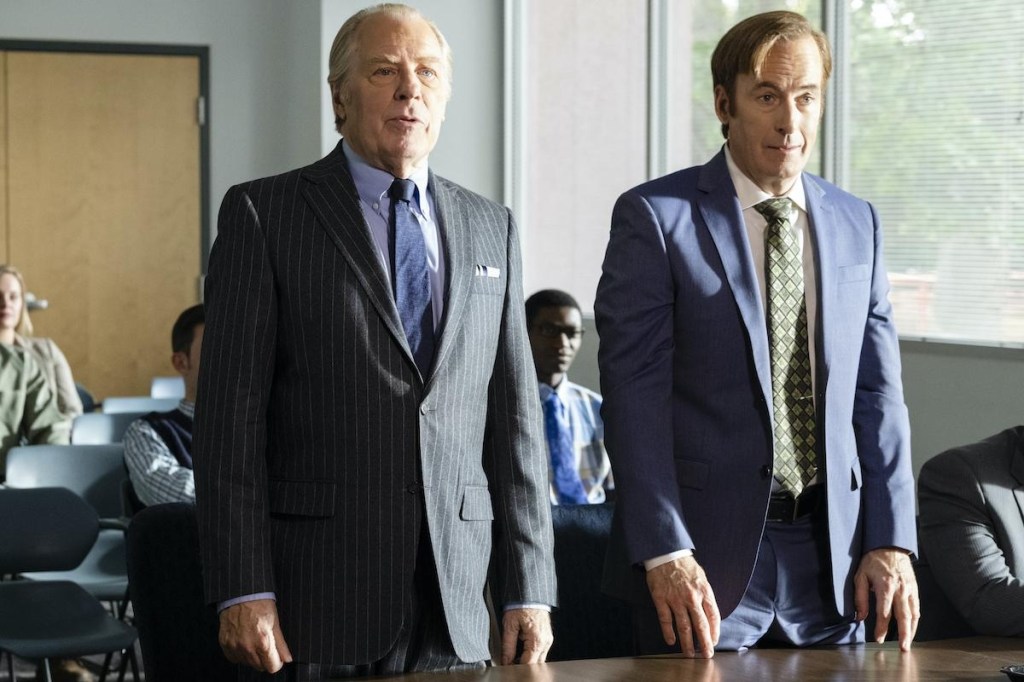
He wanted the respect he felt like he deserved. And Saul? It’s not completely different, even though he is infinitely more likeable than Walt.
However, there is one thing that always resonates with me. His speech to a young girl who did not obtain a scholarship. “The higher you climb, the more they’re gonna hate you. Good. Rub their noses in it. Make ‘em suffer. You don’t matter all that much to them? Then screw them. Winner takes it all.”
He was not talking to her. He was talking to himself. He was trying to numb Chuck’s presence. He was trying to completely annihilate Jimmy McGill and let Saul Goodman be born. And, to some extent, I think it’s right.
The winner really takes it all. I think this message can only be fully understood by people who have been completely looked down on at least once in their lives. There is no worse feeling than losing, just as there is no better feeling than winning. But let’s not forget what we are really aiming for here. Shortcuts (such as Saul Goodman and Heisenberg) inevitably lead to downfall. I am not saying it’s wrong to have fantasies about winning and having a comeback. I am saying that it should not be our main goal. People come and go (more often go than come), and, in the end, we are alone with ourselves. My demons from childhood and high school? They live only in my head, and they’re merely projections. Trauma can result in taking action and breaking the inertia. But letting it become your entire personality? That’s a completely different story.
Creating something good out of the trauma that happened to us in order to become a version of ourselves that we enjoy: I think this is the ultimate endgame and the ultimate win in life. But my game has not ended yet. As long as we are playing, losing is just psychological. Don’t worry too much — it’s all good, man. And in the end, the winner really takes it all.
P.S. Thanks a lot to Frogs are Evil for the follow. I really appreciated it!
Scopri di più da Guts' party
Abbonati per ricevere gli ultimi articoli inviati alla tua e-mail.
